

In this blog, we discuss the Water Supply (Water Fittings) Regulations 1999 and how their correct application can reduce Legionella risk. Equally, there is potential to reduce Capital and Operational Expenditure too.
For England and Wales, the Water Supply (Water Fittings) Regulations 1999 set legal standards for designing, installing and maintaining plumbing systems to prevent contamination, waste, misuse or undue consumption of water and apply to all water fittings in premises supplied by a public water undertaker. There are equivalent Regulations for Northern Ireland and Byelaws for Scotland.

In this blog we’ll focus on Regulations 3, 4, 5 and 6 which impose general requirements in relation to water fittings and the persons who undertake installation and commissioning.
Regulation 3 – Restriction of Installation.
This regulation focuses predominantly on ‘waste, misuse, undue consumption or contamination of water supplied by the undertaker.’
Cold-water storage provides a useful example of how Regulation 3 applies. An oversized tank can create several avoidable risks:
- Low turnover, which can lead to stagnation.
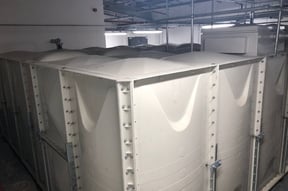
- Warming of stored water, particularly where the tank is exposed to high ambient temperatures or direct sunlight.
- A temptation to drain and refill the tank to manage these issues, even though that response could itself be seen as a contravention of Regulation 3.
The starting point should always be to ask whether the tank is needed at all. In some cases, your water undertaker may require storage to meet instantaneous demand, or you or your client may need it for business continuity. However, tank and booster pump installations are sometimes introduced unnecessarily.
Another common example is the outside hose union bib-tap in commercial premises. This is often assumed to present a fluid category 5 risk, leading to the default solution of a break tank for backflow protection and pumps to provide the required pressure. In practice, all hose union bib-taps in commercial premises should initially be treated as fluid category 5, unless a risk assessment shows that the actual risk is lower.
- If the risk assessment supports fluid category 4 or 3, a less onerous solution may be appropriate.
- If fluid category 3 is confirmed, an in-line double-check valve is sufficient.
- Avoiding an unnecessary tank and pump arrangement removes a potential hazard and reduces ongoing operational costs, including tank inspection and cleaning, additional flushing of infrequently used outlets, and pump energy use.
It can also significantly reduce capital expenditure by eliminating the need for plant, equipment, space and power. This is a practical example of sustainable design and true ‘value engineering’ that also helps reduce Legionella risk.
Regulation 4 – Requirements for Water Fittings
This regulation requires every water fitting shall –
- Be of an appropriate quality and standard.
- Be suitable for the circumstances in which it is used.
To demonstrate that the quality of a fitting is to the required standard e.g. British Standard or another national specification, it should carry accredited approval, e.g. WRAS or KIWA.
WRAS explained, in 2021, a significant change was made to the organisation previously known as the Water Regulations Advisory Scheme. The company was renamed Water Regs UK, and a new subsidiary was created called the Water Regulations Approval Scheme. WRAS still exists, but it now focuses specifically on the approval of fittings. This distinction is important, as the approval function is still often confused with the former advisory role.
WRAS approval can create a false sense of security if it is treated as the end of the compliance process. Fixtures and fittings must still be installed correctly, then inspected and maintained throughout their service life.
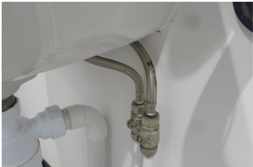 Flexible hoses are a good example. These hoses, often lined with ethylene propylene diene monomer (EPDM) rubber, can provide conditions that support bacterial growth. They should generally be avoided, but where they are used, their purpose should be limited to accommodating minor misalignment between the pipework and the fitting or to facilitate the operation of an appliance e.g., height-adjustable equipment.
Problems often arise when flexible hoses are twisted or kinked. This can stress the internal lining, leading to degradation. Small cracks and fissures in the surface can then create conditions that encourage Legionella bacteria and other pathogens to multiply.
For that reason, flexible hoses should be checked routinely and, in many cases, replaced every 5 to 10 years. The appropriate replacement interval should be based on the Legionella risk and set out in your Legionella risk assessment.
Regulation 5 - Notification
Many people do not realise that there is a legal duty to notify the water undertaker before installing certain water fittings. In general, anyone proposing to carry out this work must:
- Give notice to the water undertaker of the proposed works.
- Not begin the work until the undertaker’s consent has been given.
- Comply with any conditions attached to that consent.
Your water undertaker will have its own notification form and process, and this should be followed carefully. Once a valid notification has been submitted (typically online), the undertaker has 10 working days to respond. If no response is received within that period, consent may be treated as having been granted.
There are exceptions and additional details in the regulations, but as a general rule you should notify your water undertaker before carrying out the work. Doing so provides reassurance that the proposed installation complies with the regulations, which in turn supports the control of Legionella and other water-borne bacteria.
Regulation 6 – Contractors Certificate.
It is recommended that you use an accredited contractor (https://www.watersafe.org.uk/) for work on your water systems. Accreditation provides reassurance that the contractor has the appropriate training, insurance and technical qualifications to help protect drinking water quality.
On completion of the work, the contractor should provide the person who commissioned it with a signed certificate confirming that the water fitting complies with the requirements of the regulations.
It is not just about compliance with the regulations!
It is important to remember that compliance with the regulations is only the starting point. Ongoing water system management, in line with guidance such as ACoP L8, HSG274 and HTM 04-01, is essential to controlling Legionella and other bacteria within your water systems.
Feel free to reach out if you have any questions about this blog or if you would like to consult with one of our experts for further advice on water hygiene.
Editor's Note: The information provided in this blog is correct as of the date of original publication – July 2026.
© Water Hygiene Centre 2026