
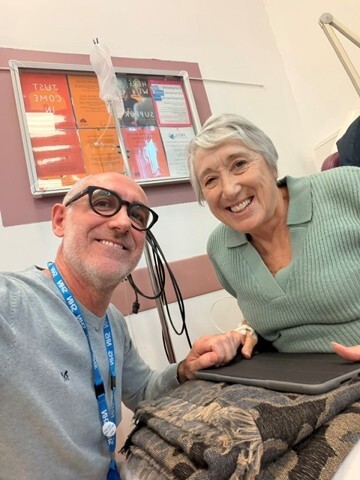
A blog with a difference: I sit writing this blog with my mum in Day Case Outpatients as she is receiving her last chemotherapy treatment. What has struck me this morning, I am on the patient-facing side of a hospital. I am normally looking behind the scenes in a plant room, a tank room, or inside an IPS panel, under a wash basin, or looking inside a tap or down a drain!
As a consultant, I think ‘patient safety first,’ and this fundamental is at the core of all the advice provided. As Mum is chatting with the staff and other people receiving treatment, I look around and observe the nursing and clinical staff doing their great work, and I see water outlets around the department; there are patient and visitor toilets and staff rooms.
The Things We Notice – and the Things We Don't
The outlets have point-of-use filters fitted to them [and no, I’ve not gone up to look at them and check their details]; I have a pretty good idea why they are fitted through the department and other areas. There are information stickers at the basins explaining why the filters are there, and they are not to be removed (how helpful).
To share a juxtaposition… Mum worked in the NHS for 15 years before retiring; in her role as a housekeeper she was responsible for making sure flushing of infrequently used outlets is completed and knew about point-of-use filters and why they are deployed for use. Mum had spotted the point-of-use filters and tipped me a wink, saying, ‘I know what they are doing…’ My Dad earlier this year had to have an operation at the same hospital where Mum is receiving treatment. Having brought Dad into hospital for the operation, he spotted these ‘doughnuts’ (his words) on the end of the taps in the toilet and asked me what they were there for….?
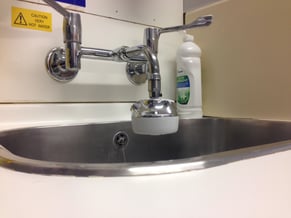 What a ‘clincher’ of a question for me, posed by Dad; he knew he was asking the right person (son number 1 being a water safety/hygiene consultant)!! Two thoughts immediately ran through my mind… do I tell Dad a ‘porky pie’ so as not to cause any worry, or tell Dad the truth? You got it, I told Dad the truth… the ‘doughnut’ is a filter to help deliver safe water to the outlet. The filter might be precautionary or to deal with some issues with water that are being investigated and resolved. No further questions from Dad.
This got me thinking: how many other parents, loved ones, relatives come into hospital and think about the ‘quality of the water in the hospital…’ No one ever is my hunch, as they are more focused on their therapy, procedure or operation.
Behind Every Safe Outlet Is a Team
The importance of water safety isn’t a thought or concern for patients but is the concern of operational teams for the building. Their training, competence, and experience of the hazards and risks that arise from water safety are paramount to ensuring patient safety. A robust water management system includes the need for a water safety group (including an Authorising Engineer (Water)), a water safety plan, hazard assessments [biological, physical, chemical and radiological] and Legionella risk assessments.
The hospital where my parents have received treatment is our local hospital, and although it is not a direct client, I have worked very closely with the Responsible Person (Water) and the team for many years. Their experience and knowledge of their building and systems are vast! My thanks to the operational team and clinical teams for looking after Mum and Dad and making their care and environment safe!
Feel free to reach out if you have any questions about the issues mentioned above or if you would like to consult with one of our experts on water hygiene.
Editor's Note: The information provided in this blog is correct as of the date of original publication – November 2026.
© Water Hygiene Centre 2026