
The water industry is constantly moving forward in various positive ways, from innovation and design to guidance or technical information being released. Sometimes it can split opinion within the industry on whether these developments are progress or a hindrance.
Dependant on perspective, new approaches, strategies, and concepts may present new grey areas…. more questions and seeking assurance-based evidence; this is especially the case where guidance has fallen behind, which is sometimes corrected by technical papers or publications to fill those gaps.
The recent NETB24/3 document demonstrates how requirements can change, as this highlighted the need for (0.2 Micron) filtration on the cold-water supply to a new building where occupants are immunocompromised or at higher risk of infection, to try and eliminate contaminants and bacteria entering the system from external sources. The ever-changing scene when trying to manage risks from bacteria such as Legionella, Pseudomonas, and NTM’s within building water systems can be very difficult.

What is a circulated chilled cold-water system?
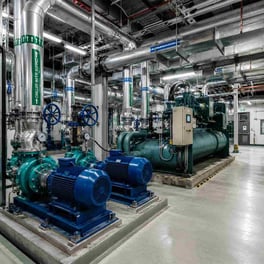 One of the more recent innovations has been the cold-water circulating system, which operates in a similar way to a hot water flow and return system, with the variation being that instead of looking to keep the hot water moving and hot, its purpose is to cool the water.
The typical system uses a chiller, often with balancing valves, flow splitters, strainers and filters located on the distribution pipework depending on the design, to maintain a constant movement of water whilst the chiller reduces the circulated temperature, keeping it below 20°C.
Chilled cold-water systems and water safety
Global warming is extensively documented currently, with temperatures increasing year on year, and more frequent drought expected. The last few years have shown hosepipe bans becoming more widespread and reservoirs being massively impacted due to poor rainfall, which demonstrates how we often take water supplies for granted, making water conservation even more important as it becomes a bigger issue for businesses and climate alike.
The impact on water temperatures we receive into our buildings and those within; increased temperatures would suggest cold water circulating systems are likely to become a more popular choice at the design stage.
How circulated chilled cold-water systems help control temperature
The circulated chilled cold-water systems are designed for supplying reduced lengths of non-circulated pipework to outlets which could be subject to possible heat gain, where flushing has typically been used to help turnover and limit stagnation as much as possible; flushing does not control temperature, with reductions in temperature often only being for a short period of time.
 This strategy is often with limited success, given the warmer temperatures being experienced through the summer months. If warm cold-water temperatures are experienced, the question is more ‘what is the temperature being supplied by the water undertaker at the point of entry to the property…?’ If the incoming temperature of mains cold water at the point of entry is above 20°C. The success of flushing to reduce the cold water to less than 20°C is an endless task, as this would likely not be possible. The chilling of cold water should remove the need as such, which will reduce water consumption and goes hand in hand with water conservation.
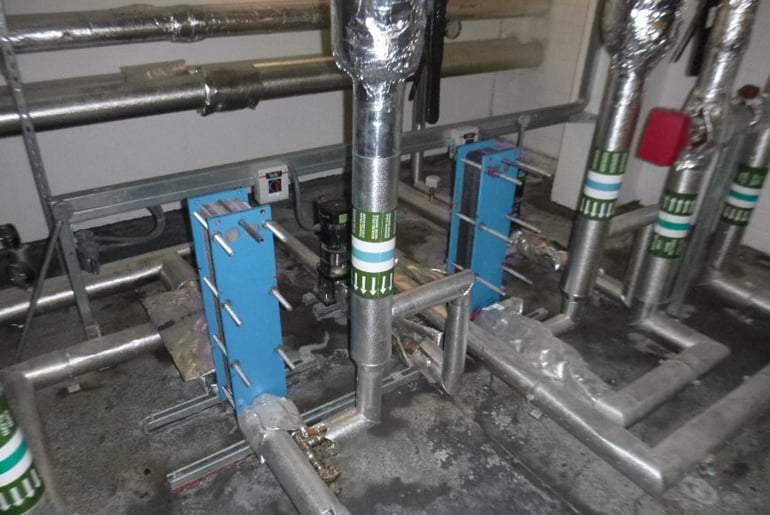
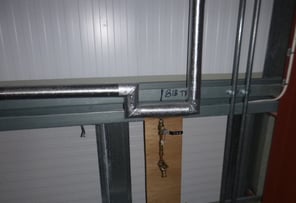
A circulated chilled cold-water system is essentially a ‘loop’ that provides flow and return to all outlets, meaning the cold water should be readily available, as even without draw from outlets the water is still circulating with the chiller unit, helping to mitigate the heat gain experienced by typical cold-water single pipe systems. The pipework should be suitably insulated to avoid heat gain as much as reasonably practicable whilst also helping to keep the water cold. Cold water pipework should be kept separate from hot water pipework, heating pipework, and hot sources such as radiators or high temperature areas such as drying rooms.
Designing and maintaining chilled cold-water systems
These systems are becoming increasingly popular; however, little is currently available by means of guidance on how they should be inspected, maintained or monitored. At best, manufacturers' guidelines cover what should be completed to individual components and fittings once operational. But, once installed and handed over, those responsible for looking after systems [i.e. maintenance, estates team and contractors] the required control measures associated with those tasks are not defined.
With this in mind, looking at current guidance, there are some tasks already defined in HSG 274 Part 2 & HTM 04-01 Part B guidance such as:
- Flow and return temperatures.
- Sentinel point [principal and subordinate loops] and other sentinel point [representative outlet] temperatures.
- Flushing of little or infrequently used outlets.
- Strainer, filter inspection and cleaning.
Monitoring circulated chilled cold-water systems
Working with what we know already, it is feasible, with some minor alterations, using what can be seen for hot water systems, to help monitor the system. Ideas would include temperatures being taken from the outlet pipework (similar to principle & subordinate hot water loops) rather than the outlet to ensure circulation is occurring and the temperature is suitable. This would also identify any possible localised issues with potential poor balancing, blocked strainers, closed valves, or cross connections that can then be highlighted along with any other flow issues that might arise.
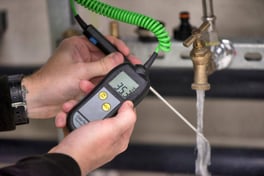 It is also feasible to record the flow and return from the chiller similar to that of a hot water cylinder, to understand how heat gain within the building is impacting on the associated cold-water pipework. This helps to understand how the flow is different from the return, and could highlight failures with the chiller, associated pumps, or the need for additional insulation or investigation.
Do we go even further again based on the possible building and how it’s been installed and consider monitoring the chilled cold-water subordinate loops within the control scheme?. It may be the case that the system is operating as it should [albeit not defined in a Legionella written scheme of control] with all temperatures within range. However, if there is no defined scheme of control, the risk is heightened should failure occur but this is not known due to a lack of monitoring.
Managing water quality and stagnation risks
Further questions… is the circulated cold-water system, which now recirculates, turning over less fresh mains water into the tank?… this may impact the quality of the mains supply due to stagnation occurring, but also impact the quality of water in the tank as it is recirculated water which may have picked up contamination around the system.
This now poses the question of whether supplementary control is required of the recirculated water coming back to the cold-water tank… remembering that with hot water returns the temperature within the hot water generator is providing thermal kill. There is no ‘kill’ step with cold water recirculated systems.
Operational considerations for chilled cold-water systems
Some other operational thoughts…
- Due to the system now being circulated, should there be further BMS sensors around the system…? Which are becoming more common within various sectors.
- With any new system installation, it must be installed and commissioned correctly and to an agreed standard, not defined within the UK. Although BTGA in Germany has published practical guidance: how do I keep cold water cold.
- Training and competency of staff to operate and maintain such systems. Sufficient resources to complete any required additional PPMs.
- In the event of failure or loss of control with the chiller or supplementary control system, what actions should be taken, and are these currently documented within your Legionella written scheme of control or water safety plan?
The importance of establishing or updating both the logbook and control scheme is always important and often overlooked. A few things to be mindful of when new fittings or pieces of equipment are installed:
- Does this require alterations to be made to these documents?
- What type of monitoring and inspections should possibly be used moving forward to control any possible risks?
There should also be an action plan in the event of failure, outlining how the risk can be managed at such time to avoid stagnation and heat gain developing.
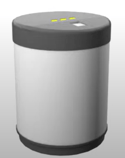 No building layout or system will typically be identical, meaning every detail should be focused on an individual basis. There are various chilled water recirculating systems available, all with their own controls, similar to how the pipework may vary: will it go directly from room to room, or will it drop and loop from the main flow and return cold pipework. In this case, the chiller will have its own installation and service schedule to be completed that can be used, but what additional PPM tasks will be needed will have to be decided on.
Why chilled cold-water systems need to be considered at the design stage?
The discussions at the design stage are the most critical and play a pivotal role in making sure the design and installation are seamless. Many lessons can be learned in advance of the building being handed over, rather than dealing with the issues afterwards, which could become costly financially but also extremely difficult to correct once the building is occupied.
It must always be noted that with any action we do now, there will also be a further action needed later due to how control schemes and management of water systems are so intertwined. The susceptibility of the building occupiers always needs to be considered along with the soon-to-be-installed piece of equipment and the questions asked: Is this suitable for the user of the outlets? And will this be suitable for its purpose?.
Finally, the next time you think “it’s only a little install, chilling the cold water is a great idea,” think of the system design - is it suitable for your building? Is what you are looking to achieve going to be achievable?, the additional actions which are often overlooked and the possible repercussions due to a lack of guidance.
Feel free to reach out if you have any questions about the issues mentioned above or if you would like to consult with one of our experts on water hygiene.
Editor's Note: The information provided in this blog is correct as of the date of original publication - October 2026.
© Water Hygiene Centre 2026