
In July 1976, around 2,000 American Legion members gathered at Philadelphia’s Bellevue-Stratford Hotel for a state convention marking the United States bicentennial. Shortly afterwards, numerous attendees and members of the public fell ill, and 34 people died. As the outbreak primarily affected veterans, the media dubbed the illness “Legionnaires’ disease”.
What Is Legionnaires’ Disease?
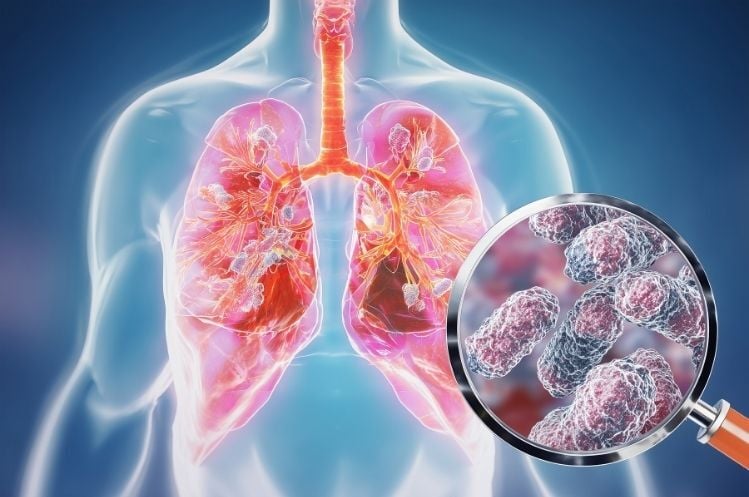
Legionnaires’ disease is a severe type of pneumonia contracted by inhaling mist or water droplets containing Legionella bacteria.
Symptoms usually appear 2 to 14 days after exposure, and they include:
- High fever and chills
- Coughing
- Shortness of breath and chest pain
- Muscle aches and headaches

Where Can Legionella Be Found?
Legionella bacteria occur naturally in water sources such as rivers and ponds, but people rarely contract the disease from these environments. Outbreaks are more often linked to purpose-built water systems that provide conditions in which the bacteria can multiply e.g., cooling towers, evaporative coolers, hot and cold-water systems, and spa pools.
Why Is Legionella Risk Management Still Important?
Legionella risk management remains crucial to ensure people do not suffer harm from legionellosis (illnesses caused by Legionella bacteria). Legionella bacteria can be hazardous to health and therefore is subject to the Control of Substances Hazardous to Health Regulations, which further enhances the Health and Safety at Work etc Act 1974 (HSWA) for duty holders, employers and those in control of premises to operate and maintain their water systems safely and compliantly.
How Can You Reduce the Risk of Legionnaires’ Disease?
 Awareness can easily be overlooked, but basic Legionella training helps teams recognise and report emerging or previously missed issues. A clear reporting route allows facilities and estates teams to act before the next scheduled maintenance visit.
Risk management should eliminate hazards rather than relying on controls. While removing water supplies is rarely practical in occupied buildings, specifications and project designs based on actual system needs can minimise risk.
Thermostatic mixing valves (TMVs) illustrate this approach. A scalding risk assessment may show that a hand-wash basin does not require a TMV; omitting an unnecessary valve removes an additional Legionella hazard.
Overall, the main physical control measures that reduce the risk of Legionnaires’ disease are:
- Temperature control - Prevent water temperatures between 20-45oC
- Prevent stagnation – remove dead-legs and, if infrequently used, outlets can be removed, do so; if not, they should be regularly flushed.
- Cleaning and maintenance – many water system components require planned preventative maintenance (PPM) such as the descaling of outlets, cleaning and disinfection of shower heads and hoses, TMV servicing, cold water tank inspections. HSG 274 Part 2 gives guidance.
The Importance of Legionella Risk Assessments
A Legionella risk assessment should reflect the water system’s specific design and operating conditions at the time of review. The assessor should then provide an action plan identifying issues and recommending appropriate controls.
Technical guidance explains how to operate and manage different water systems, but it cannot address the site-specific conditions identified through a detailed risk assessment.
Why Water Safety Training Matters
Water safety training helps teams operate and maintain water systems safely, reducing the risk of harm from Legionella. Training should match each person’s responsibilities and extend beyond routine operation and maintenance. Tailored options range from governance courses for those with oversight duties to toolbox talks for site teams carrying out essential tasks such as cleaning and flushing.
What Is a Water Safety Audit?
A water safety audit is an independent, systematic check of how an organisation manages, controls, and maintains its building water systems to ensure safety and legal compliance.
It should include:
- M
 anagement Structure: Reviews key appointments like the Duty Holder and Responsible Persons to ensure roles are clear and documented.
 - Policies and Records: Inspects water safety plans, training records, logbooks, and maintenance schedules.
- Site and System Checks: Examines physical assets like storage tanks, pipework, and temperature-monitoring controls to prevent bacteria like Legionella.
- Action Plans: Provides prioritised recommendations to fix any gaps in safety, training, or daily operations.
What Is an Authorising Engineer (Water)?
An Authorising Engineer (Water) is an independent specialist adviser who provides expert oversight, technical guidance, and governance for engineered water systems to ensure safety and regulatory compliance. Their knowledge is not confined to Legionella but can help with Water Regulations compliance and potentially bring reductions in Cap Ex and Op Ex. Core responsibilities include:
- Independent auditing
- Competence assessment
- Water safety support to Water Safety Groups and wider client teams.
- Project Design reviews
The role originated primarily within UK healthcare but is increasingly being utilised across large commercial property portfolios, educational facilities, local authorities and industrial sites.
50 Years On: What Have We Learned About Legionnaires’ Disease?
Fifty years after the 1976 Philadelphia outbreak, we know that rigorous water management can control the risk from Legionella more effectively than reactive measures. Legionnaires’ disease occurs when the bacteria multiply in complex plumbing and warm-water systems, then spread through mist that is inhaled.
Although the HSWA 1974 exists, organisations must now also comply with more specific regulations and approved codes of practice to protect people from waterborne pathogens.
Feel free to reach out if you have any questions about this blog or if you would like to consult with one of our experts for further advice on water hygiene.
Editor’s Note: The information provided in this blog is correct at the date of original publication – September 2026.
© Water Hygiene Centre 2026