

The UKHSA’s official statistics for Legionellosis in residents of England and Wales for 2024 state the following;
‘Legionellosis is a spectrum of diseases caused by Legionella bacteria. Illness can range from mild (non-pneumonic legionellosis or Pontiac fever) to LD, which is a form of atypical pneumonia that can be severe and is potentially fatal. Anyone can get infected by the bacteria, but certain population groups, such as those aged 50 years and over, smokers, and individuals with weakened immune systems, are more vulnerable. LD is a seasonal disease with activity in England and Wales increasing during the summer months, usually reaching a peak between July and September.’
In total, there were 472 LD cases reported for 2024, with 2.8% of those fatalities. 52% of those cases are related to the community, whilst 44% are related to travel outside the UK. Numbers of cases [location dependent] were reported as 0.5 – 1.3 persons/100,000 of the population, and the 5-year average for confirmed cases of LD [2020-2024] in England and Wales was 437. It seems reasonable to suggest that by most measures, LD is an occasional and ‘relatively’ uncommon disease.

Is Legionella a risk in cold weather?
The incoming cold supply isn’t growing bacteria [or at least very little], we’re spending more time indoors using our hot and cold water systems frequently - surely the conditions simply aren’t there for the bug growth and proliferation, or the associated risks that come with higher ambient temperatures, either indoors or outdoors. It’s also true for the majority of domestic hot and cold water systems that ‘Legionella risk management isn’t particularly complicated, guidance hasn’t changed for several years, I have a Legionella written scheme of control in place, and I know what I’m doing, etc’
Legionella risks can change faster than you think
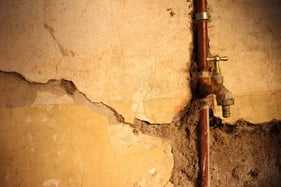 Its easy to be flippant and on the surface, many aspects of Legionella risk management certainly aren’t complicated, BUT it’s also true to say domestic water systems [including aged water systems] conditions can change dramatically in the short term, we may not be as vigilant as we think and we may also be relying on staff who aren’t as competent as they or we think they are.
A further look into the aforementioned statistics finds that the seasonal LD peak is noticeably flatter in recent years, including 2024, and when overseas travel cases are removed, LD cases [and therefore overall risks] are very much more evenly distributed throughout the year.
Legionella risk doesn’t hibernate in winter
During the colder periods of the year, the following will all be apparent;
- Cold weather outdoors will influence the operating temperatures of domestic water systems, and although it will always be preferable to avoid temperatures at 20 – 45 °C, it is likely that significant areas of circulation systems will sit within these unwelcome parameters.
 Within certain industries, in particular education, hospitality and leisure, buildings will STILL become unoccupied due to seasonal changes in use and holiday periods, which follow as regularly as they do in any summer period. This lack of throughput in stored water systems and the stagnation that will follow may be the trigger for conditions to worsen when temperatures start to rise.
- A poorly managed and maintained domestic water system will create opportunities for bacterial growth, whatever the season, and even the best PPM records and results are only an indicator of potential foreseeable conditions within which bacteria may grow.
- Irrespective of a previous ‘clear’ history of Legionella problems at any site, this should not provide an organisation with a false sense of security or permit any relaxation in compliance measures that are undertaken.
- There are as many ‘older’ properties as there are ‘new’, and inherent water system issues or frailties are at best, only partly visible.
- Although Covid-19 is now managed very differently than it was back in 2021, occupancy rates may still not have recovered fully to this day, and whether it is Winter or Summer, vigilance is vital.
- Legionella guidance without exception recommends ROUTINE monitoring and maintenance of systems – Winter or colder periods of the year should not be a licence to reduce statutory obligations.
- All staff will remain fallible, however well-trained, motivated and competent they may be.
Guidance exists for a reason
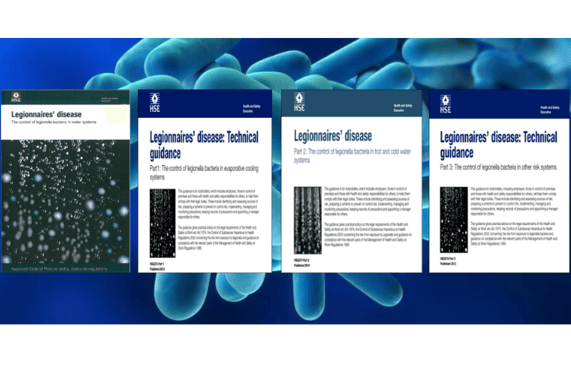
Although it may sometimes be difficult to sustain that vital interest in Legionella compliance when the message has essentially remained largely the same for >25 yrs [technological changes permitting]. It is also true to say it’s no less important to be able to demonstrate your building occupants are as safe as they can be, and the HSE and Department of Health guidance, in particular HSG274, ACoP L8 and HTM04-01 are followed to the letter. Much of the current guidance is an indication of the minimum requirements needed to ensure adequate water safety management.
Winter is no excuse to relax Legionella controls
Overarching risk minimisation measures during Winter periods may include any and all of the following:
- Full and continued completion of relevant planned preventative maintenance tasks based on guidance and your Legionella written scheme of control or water safety plan.
- Review and implementation of your infrequently used outlet flushing regime, ensuring it is both flexible enough and comprehensive enough to reflect day-to-day and season-to-season risks. There may be a need for specific pre- and post-closure/occupancy change measures.
- Continued microbiological sampling [as necessary] based on a documented sampling plan.
- Ensuring communication between all staff and departments minimises unforeseen occupancy issues.
- Ensuring that despite increased energy use during Winter periods, reducing hot water temperatures will not be used to offset any extra costs.
- Ensure that the hot water temperature is not compromised by the competing demand for heat input to the space heating system.
- Reviewing PPM schedules to ensure all planned tasks are able to be undertaken if staffing is reduced during the winter holiday periods.
- Educating building occupants in the simple and straightforward tasks they can undertake to help keep domestic water systems cleaner and safer for everyone.
- Using periods of potentially low occupancy during the winter to undertake any outstanding Legionella risk assessment or other reactive risk minimisation actions.
Although there is no need to second-guess your [hopefully robust] risk management approach, the importance of ongoing review or undertaking a water safety audit and acting on lessons learnt can never be underestimated.
Year-round management of Legionella is important for many reasons, and breaking the ‘chain of causation’ to minimise the risk of adverse legal and financial consequences, and reputational damage will continue to be a worthwhile pursuit.
Feel free to reach out if you have any questions about the issues mentioned above or if you would like to consult with one of our experts on water hygiene.
Editor's Note: The information provided in this blog is correct as of the date of original publication - February 2026.
© Water Hygiene Centre 2026